
PARIS


Charles & Daphné Zana
We at Kilometre Paris would like to present our muses: Charles & Daphné Zana.
They are not a couple who blend into each other, they orbit. Opposites in rhythm, but aligned in curiosity, they move through Paris like they’ve always belonged to its streets, its salons, its silences. He, the architect of reverent spaces. She, the conjurer of irreverent jewels. Together, they sketch a portrait of elegance that is both lived and subverted.
Daphné was born in Bourges “by accident,” raised in Cholet, Toulon, Grenoble. Paris was always the horizon, the city she moved to at 17, against her parents’ wishes, with nothing but necessity in her bag. Then New York. Then four children. Then life, jazz school, theatre, motherhood, an art gallery, a new beginning. And now, Luby, her jewelry line. Pieces with a wink. The Lady Di ring recast in candy resin. A swan ring nodding to Capote’s circle. Nothing is quite as it seems, everything has a twist.
Charles, calm and contained, trained at the Beaux-Arts. His agency is behind some of the most refined interiors in Paris, hôtel particuliers, foundations, houses filled with light and lineage. His voice is soft, his vision sharp. If asked what project he’s proudest of, he’ll name the next one. Always the next. But still: the hotel in Saint-Tropez, the private house on Place du Palais Bourbon, the foundation in Arles housed in a Romanesque church-turned-furniture-warehouse, all carry his signature: timeless without nostalgia, restrained without fear.
Give them 24 hours in Paris, and they’ll disagree, tenderly. Flore or Wany for breakfast? Tradition or intimacy? A walk along the Seine or through the Luxembourg Gardens? They’ll volley, each holding their ground, then meet in the middle, probably at La Palette, over eggs and salad. They’ll slip into museums like locals, not tourists, La Maison de Delacroix, the Fondation Pinault, the Musée de la Vie Romantique. And for dinner? Streza for its sharp crowd, Septime for its younger fire, or simply toast and fish at Le Duc, where the sole is perfect and the frites still come salted from copper pans.
Ask them where they’d go with three months and no limits, and their voices split, then merge. Daphné dreams of New Zealand’s vastness, of trekking through space and stillness. Charles leans toward Japan, the depth, the detail, the curation. They'd do both. With books, with music, with time. A balance of wild and precise. Just like them.
They believe in the handmade. For Charles, it’s in the gesture, the drawing that begins a structure. For Daphné, it’s in the remix, the stone reimagined, the code broken. They live in form. They play in contrast. They are old-school and offbeat, polished and playful. Parisians, yes, but not the kind you expect.
They are a duet of tension and taste. A conversation between legacy and liberty. Between marble and mischief.

Julie Gayet
We at Kilometre Paris would like to present our muse: Julie Gayet.
If you give her 24 hours in Paris, she won’t rush you through monuments or museums. She’ll take you into the dark. Into rooms where light trembles on a screen, where silence thickens before the first frame, where cinema still carries the air of ritual. Paris holds them everywhere, tucked between cafés, behind courtyards, small halls with velvet seats, where diversity is practice, not posture. These are the places she loves. She knows their addresses the way others know bakeries. To follow her is to trace a map of projection rooms.
But Julie Gayet is not only spectator. She is also actress, producer, distributor, director. Her latest film is Olympe de Gouges, Les Femmes dans la Révolution, a portrait of a woman who wrote the Declaration of the Rights of Woman and Citizen yet was absent from the textbooks. In school, she says, we learned the Revolution was men: men debating, men deciding, men in Versailles. Women appeared in the margins, if at all. Julie decided to retell it otherwise, to make visible what had been made invisible. After Olympe comes Louise Michel. The thread is clear: women erased, now restored. She calls it not cancel culture but bright culture, to shed light, not erase, to reveal, not delete.
This instinct, to illuminate, runs through all she does. For more than a decade she steered her production company, Rouge Internationale, producing films, guiding directors, building projects. She knows what it means to find funds, to edit scripts, to stand beside an artist until their vision takes form. But when COVID came, she paused. One project, La Renaissance, stalled. The company slowed. And in that pause, she turned to another idea that had been waiting in her: to create a festival that would connect music and image, two worlds she knew deeply.
The result is Sœurs Jumelles, in Rochefort. Not a market, an agora. A place where artists and professionals cross, where musicians and filmmakers sit side by side, where students meet their future masters. Five years on, it stands: concerts that bleed into screenings, previews into debates, encounters that blur stage and screen until the border vanishes. She insists on parity. She counts women, she invites them, she puts them on stage. In cinema, only a quarter of directors are women; in music festivals, the number is lower still. She refuses to accept it. At Sœurs Jumelles, equality is not a promise, it is the rule. And the atmosphere changes because of it: lighter, freer, more joyful.
The festival also restores those usually invisible: composers, who shape films but are rarely named; technicians, whose gestures sustain performances. She recalls Alex Lutz introducing his film alongside his longtime composer, Vincent Blanchard, a man rarely seen but essential, suddenly given space to speak. This is Julie’s method: to make visible what is hidden, to give voice to those behind the curtain.
And always: transmission. She invites schools, La Fémis, the Conservatoire Supérieur, Courtrage V, the Sorbonne. She wants young musicians and young filmmakers to meet early, to understand that no image exists without sound, no music without image. She calls it habit: to gather, to exchange, to know where to find the other when a project begins. Sœurs Jumelles is not just a festival. It is infrastructure, community, continuity.
Julie also speaks of the hand. She remembers editing on film, cutting and taping with scissors, handling reels with silk gloves for Agnès Varda. Today the tools are digital, but the craft remains manual in spirit. Cinema is still handwork, she says, the same patience, the same gestures, even if machines now assist. She gardens by hand, she cooks, she embroiders. For her, the hand is time embodied, patience made visible, the small human gesture that makes creation possible. Even technology cannot erase it.
And when asked what she would do with a carte blanche, a black card, infinite travel, infinite miles, she does not name a destination. She names a verb: to weave. She imagines ropes stretched from Rochefort, where the royal rope factory once stood, to the rest of the world. Ropes that connect cultures, crafts, artists. She dreams of inviting Japan, Miyazaki, Joe Hisaishi, the universe of animation and music. She dreams of contemporary artists, of percussionists exploring shamanism, of improbable encounters staged not on social media but in real presence. She wants Sœurs Jumelles to be that bridge, to host what cannot be streamed, what must be lived.
Julie Gayet does not consume the world, she connects it. She is cinema, but not only. She is also song, she began as a singer. She is also memory, she carries women back into the light. She is craft too, cutting, weaving, tending with her hands as if the gesture itself were memory. Ask her who she is and she won’t fix the answer. Actress, yes. Producer, yes. Director, yes. But more than titles, she is a weaver: of music with image, of women back into history, of screen with hand, of generations knotted together so nothing is lost.


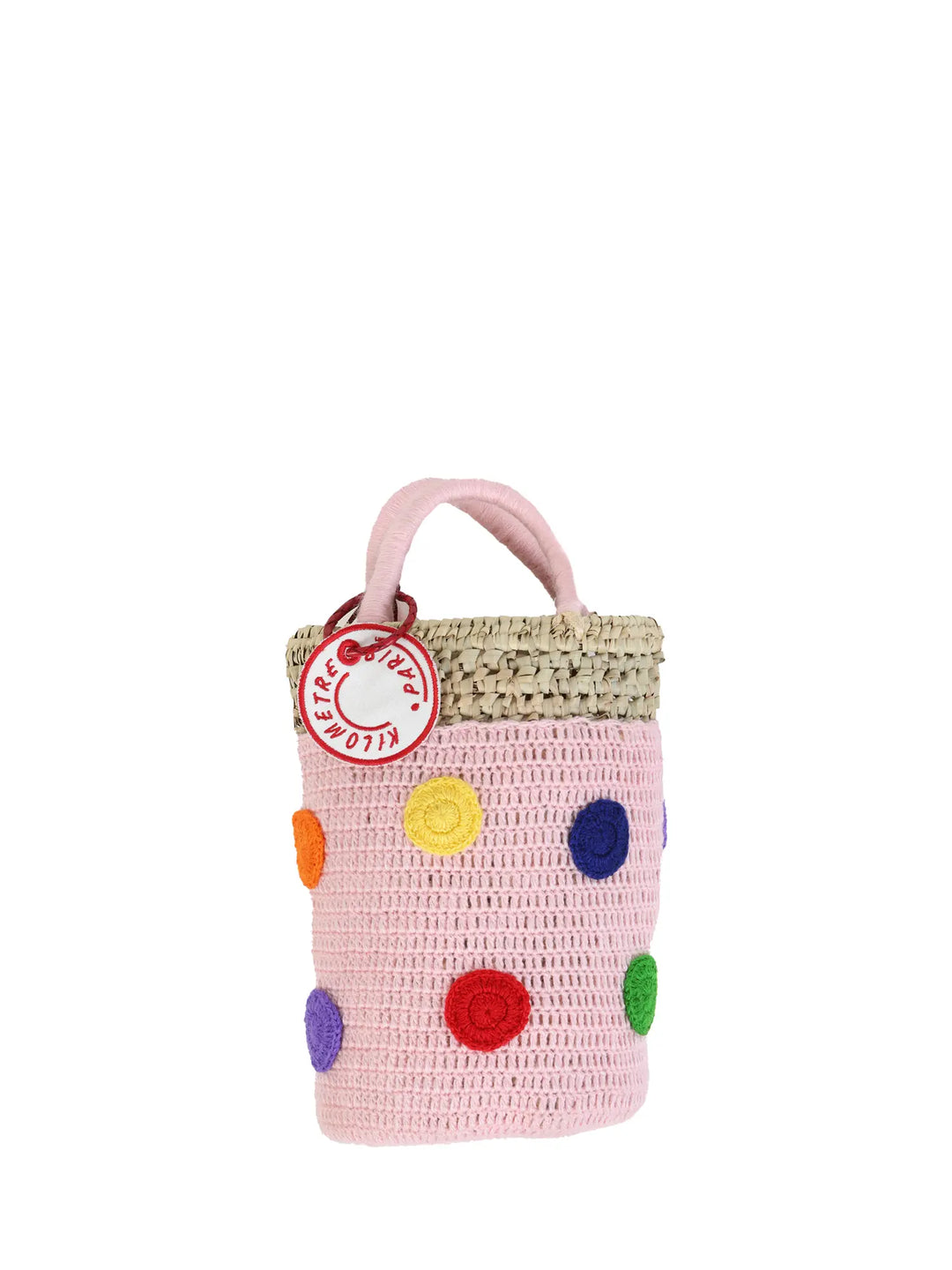


Daphné Hézard and Jacques
We at Kilometre Paris, we would like to present our muses: Daphné Hézard and her son Jacques.
She begins her Paris at l’Escale, the café-bar perched above the Seine, facing the Tour d’Argent, where water and light shimmer against stone. Morning croissants from the Tour d’argent’s bakery just across the bridge; two tiny tables for coffee before slipping into the Pontoise pool, at dawn for baby swimming or when rain makes the city blur. A ritual of water and stone, of lengths and laughter, always closing with déjeuner chez René, Paris as both institution and intimacy.
With a limitless card she would not chase faraway airports. She dreams instead of a French hamlet, stone by stone restored, a place to welcome friends and strangers, to anchor lives. Since the birth of Regain in 2018, she has quietly made it her mission to prove that the extraordinary does not require departure. Regain is a quarterly magazine devoted to rural life, sustainable agriculture, the craft of farming, and the poetry of slowing down, born from a chance discovery of a 1950s farming journal in Tuscany, revived by her as an ode to land and community. In just a few years, it has become a cult success, gracing kiosks with bold covers, such as Catherine Deneuve holding a kid goat for its third anniversary, rurality and elegance intertwined.
And still, she would take Jacques, yes, his papers first, the passport, then Brazil. A country she only knows in fragments, the Northeast, Jericoacoara, a touch of Rio, but that calls her further, to Bahia, to São Paulo’s mountains, to places that sound like music and must be followed.
Daphné is a storyteller who gathers people around places, who makes communities bloom where others see ruins. Jacques, still small, is already her accomplice in these journeys: Parisian mornings, imagined villages, long-haul flights, or no flights at all.

Cosmo Gonik
We at Kilometre Paris would like to present our muse: Cosmo Gonik.
He chose his own name, Cosmo at twenty-three, because the one on his ID didn’t fit. He wanted something universal, something that belonged to everyone and no one. Facebook was new then; it demanded a surname. He laughed, wrote Gonik, a small play on words, a wink to Dalí who once said he wasn’t a genius in painting or sculpture but in the “cosmogony”. It stuck. A joke turned destiny.
Cosmo makes music, but not only. His world moves through rhythm, gesture, trance. He has a duo, Cuarto Mundo, with Thomas Lavergne, French producer and friend, working out of a studio that feels more like a laboratory: sound as experiment, silence as ingredient. There’s Santa Pirata, a live DJ project with singers from Arcade Fire, four pirates at the decks, summoning crowds into wild, voodoo-colored dance. And there are his Ecstatic Dance, his Cosmic Dance, born from the need to move freely, consciously, without escape or distraction.
No phones. No alcohol. No smoke. Just bodies and sound for two hours. Presence as practice. The first time, it was mostly women, fifty of them, maybe sixty. Now men come too, hesitant at first, then loosened, open. He dances with them. He is not behind the booth; he is in the circle. He brings maracas, tambourines, small percussion. He laughs, sweats, becomes part of the release. He calls it collective catharsis, joy that happens when the body stops pretending.
He reads the Tarot de Marseille too. Not for future, but for present. A disciple of Alejandro Jodorowsky and his son Cristóbal, trained twenty years ago, he sees tarot as language, symbols, metaphors, alphabets of the unconscious. It speaks of dreams, of family trees, of what remains unspoken. “Never trust anyone who reads the future,” he says. “The cards speak of now.”.
If you have 24 hours in Paris, he’ll take you not to a café but to dance. To the Consulat, near Voltaire, a cultural center turned temple of movement. There, fifty or sixty people gather to move without looking, to remember their bodies. “Today we stare at our phones all day,” he says. “Here, we stare at nothing. We listen.” The dance becomes yoga, prayer, play. Freedom disguised as rhythm.
Ask him about craftsmanship and his answer comes without hesitation: it’s all in the hand. The care, the detail, the intention. Whether it’s shaping clay, painting, composing, or harvesting perfume, the gesture carries consciousness. In the studio he builds by hand, choosing every instrument, every drum, every fragment of an old song, cutting and reshaping the voice until it breathes differently. “We don’t work with AI,” he says. “It must come from love, from search, from touch.”.
And if you give him a black card, three months, and no limits? He wouldn’t buy silence. He’d export the dance. Form a crew, travel from continent to continent, Ecuador, the Amazon, Morocco, Egypt, South America, to gather children, mothers, elders, strangers, and make them move. He’d bring the Ecstatic Dance everywhere, barefoot on every floor. His joy is in watching someone, anyone, surrender, eyes closed, body awake, free at last.
Cosmo Gonik is not a DJ. He is a conductor of energy, a viber, a translator of trance, a bridge between rhythm and release. He works in music, yes, but his medium is liberation.

Garance Senes
We at Kilometre Paris would like to present our muse: Garance Senes.
She starts the day in the 17th, her quartier, underloved by the trendsetters, but hers, still. You’ll exit her flat and walk not fast, not slow, just the rhythm of girls who know how to live. She’ll take you to her boulangerie, not for show, for croissants, maybe. Or not at all. Because this morning might belong to maple syrup and crisp bacon, to a stack of pancakes like her grandmother used to make, each one laced with childhood, with America, with the echo of family rituals folded into dough.
Then, the day unspools. Maybe an exhibit at the Jeu de Paume, maybe L’Orangerie. Art, but lightly touched. What she truly craves, the one moment she guards like a secret, is a single scoop from Gigi Gings, on the Canal Saint-Martin. An ice cream sandwich, yes, but not just. It's made fresh, daily, in shy little batches that vanish before noon. She queues for it every weekend with her best friend, because taste, like friendship, needs repetition. Because rituals are rebellion. Because it’s bobo, yes, but bobo with purpose.
And then, sobremesa. Not the Spanish pause, but Sobré Messa, a bar in the 18th where wine is poured like poetry and the chef changes every three weeks. Right now there’s an Indian woman in residence. Tomorrow, who knows. She goes there to drink well and be guided, to trust the palette of someone else, and if hunger lingers afterward, she’ll pull you home, feed you herself, put on a film. Because the end of the night matters too.
She speaks with her hands. Not metaphorically. Literally. She tattoos. That’s her métier, her medium, her message. And the hand, she says, says everything the face won’t. It precedes the voice. It trembles when you lie. It touches before you even think to. Her phone is a museum of hands, her grandmother’s, her mother’s, her friends’. Her own. She studies them, draws them, reveres them. Doesn’t use tablets. Doesn’t trace. Draws by hand. Tattoos by hand. She believes in gesture. She believes in memory stored in linework.
She goes by two names. Garance, for her friends and her past. Néo, for the world she’s building, for the version of herself who draws her own graphic novel in real time. Glasses, polka dots, Pierrot dreams. Her avatar is a little sad, a little lunar, always in soft clothes and high emotions. Her dream isn’t fame. It’s a bookshelf. With her books. Her world. Her stories drawn out in ink, then maybe in skin.
And if Kilometre handed her a black card and a blank calendar, if money were a breeze and time an open hand, she’d call her girls first. No solo sabbatical, no isolationist fantasy. She’d fill a suitcase and fly to Brazil. Rent a house. Find the sea. Watch surfers. Dance. Stay for three months or forever. Live slowly. Share everything. Because joy, for her, is a collective sport.
And when she tattoos, in Paris, London, New York, she forgets, sometimes, how powerful it is. That strangers hand her their skin and leave with her stories etched forever. That her drawings travel across continents on living bodies. That someone, somewhere, wears her work like a vow.
Garance Senes is not just an artist. She is an archive of touch. A memory in motion. A girl who speaks with her hands, and means it.

Laurent Claquin
We at Kilometre Paris would like to present our muse: Laurent Claquin.
His Paris is not anchored in a single street or square but in thresholds, between gesture and institution, between hand and horizon, between care and design, where the city’s heartbeat meets the luxury of touch. He began as consultant in a world of numbers and briefcases, then translated into the textures of cultural memory, in the Jeu de Paume’s soft quiet, in the Centre Pompidou’s shifting light, in the corridors of the Minister of Culture, where architecture becomes language and policy lays the groundwork for space.
He traveled then, not by map but through the thread of houses, joining Kering in the mid‑2000s (just as the group was deepening its hold on fashion’s icons), and since 2012 guiding its Americas as gardener of expansion, planting the House flags in New York, in Latin grids, watching the branches of Gucci, Saint Laurent, Alexander McQueen, Balenciaga extend across time and continent. Hands shaping growth, quietly, with rhythm.
In 2017 he tended another bloom: Tomas Maier, a creative house entrusted to him, held gently until its petals closed in 2018, and he turned instead to brand, to narrative, to voice. In mid‑2024, he took on a new shape: Kering’s first-ever Group Chief Brand Officer, a name that carries more weight than title, entrusted with weaving the disparate threads of editorial, event, and image into a single tapestry, so that each message travels as choreography, each campaign an echo of identity in motion, both intimate and global.
He lives in the tension between collective and private, Paris’s corridors and New York’s avenues, boardrooms and the silences of a gallery, Kering’s executive committee and the quiet care of amplification. His tools are narrative and ritual, staging and sequence, forming the spaces where imagination anchors, where brand becomes ritual, where fragrance of history and future meet.
Laurent Claquin is not simply a steward of luxury houses, not simply a strategist of visibility. He is a seamstress of place‐making, a weaver of voice and image, a gardener of growth and memory whose Paris is an architecture of gesture, whose brand is rooted ritual and whose ambition is not spectacle, but resonance in the human scale.


Serena Cancellier
We at Kilometre Paris would like to present our muse: Serena Cancellier.
She was born in a blizzard of white, January 10th, 1979, her mother wading through two meters of snow, carrying a child named for serenity into a world already testing its meaning. She likes to start there, with weather. Fog, rain, darkness, snow, she believes in their beauty, their discipline. There is magic, she says, in difficult conditions. Maybe that’s her nature, forged in difficulty, magnetized by it, finding her light precisely where things resist.
Her childhood moved to the rhythm of anthroposophy, Rudolf Steiner’s quiet revolt, where thought and hand were never apart, where children learned that every material had spirit, and the world itself a pulse. Medicine was homeopathic, food biodynamic, thought spiritual. It made her grounded, or, as she says, “rooted in presence.” Meditation was family habit. So was vegetarianism. She has never eaten meat.
And yet, she became a leather designer.
At first, she resisted. She had wanted to work in India, in one of Gandhi’s villages where men still spin thread and weave cotton by hand. She had even arranged the trip. But at the same time came an offer from Milan, an atelier of prototypes, half design studio, half workshop. She asked her meditation master what to do, certain he’d tell her to go to India. Instead, he smiled and said: Be a camel in the desert. Live in beauty. She went to Milan.
Her path unfolded through the great houses: Marc Jacobs, Bottega Veneta, Vionnet, Louboutin, Prada, Balmain. She lived between Milan, Vicenza, Florence, Paris, the map of her life drawn by ateliers. For Louboutin, she created his first true handbag collections; at Prada, she learned structure and silence; at LOUBOUTIN she found Paris.
Since 2018, she has her own studio, a place between DESIGN and ADVICE , where she moves fluidly between creation and strategy. She is art director, designer, advisor, working with brands that value the hand and the idea.
One of them, she won’t name it, but it is in Umbria, A humanist brand, founded on the idea that a company can serve beauty, culture, and the dignity of humankind.
Parallel to that, Serena travels for work that feeds her spirit as much as her craft. In Colombia, she advises local artisans on raffia weaving, fibers thick or thin, rigid or supple, drawn from palms that yield textures like dialects. In China, she discovered perfection: a level of precision in luxury equal to couture, Valentino, Dior, but born from a different discipline. In Tunisia, she worked with the United Nations on a creative program for women entrepreneurs: strong, veiled, unveiled, unstoppable. Many had no right to international accounts, yet found ways to build brands, export, survive, thrive. “They were extraordinary,” she says quietly. “It changed me.”
Her work moves between cultures, between hands. She studies how artisans think, the logic of the loom, the silence of the sculptor, the patience of those who carve wood. Her eye is Italian, her instinct global. She chases not beauty alone, but balance, the point where ethics and aesthetics fold into one another, where form becomes integrity.
And always beside her, Théo, a wire-haired dachshund with the pride of an old soul, trotting through airports and ateliers like a small, determined echo of her own will. He follows her through airports and ateliers, a mascot, a witness. She says he reminds her to pause, to walk, to breathe, to look.
Serena Cancellier designs bags, yes. But that is only the visible part of her craft. Beneath it is a philosophy: that beauty is responsibility, that creation is dialogue, that hand and spirit must stay connected. She is both mind and hand, strategist, dreamer, maker, all at once.
Born in snow, she learned early that warmth is not found but built, stitched, carved, woven into being. Everything she touches still carries that lesson.

Benjamin Loyseau
We at Kilometre Paris would like to present our muse: Benjamin Loyseau.
Not only a photographer, a witness. He left Paris too young, maybe too fast, with barely more than a camera and the need to see. To really see. Congo, Lebanon, Rwanda, Senegal, not postcards but fault lines, places where fragility walks next to strength, where silence is louder than spectacle. He doesn’t hover. He sits. He listens. He waits. Until a face, a hand, a moment refuses to disappear.
Fifteen years with the UNHCR, on the road of exile. Not statistics, not words in reports, but tents under rain, a body bent, a child inventing a game out of nothing. His images do not flatter. They hold. They keep. They resist erasure.
Paris has claimed him too. In 2021, when Christo and Jeanne-Claude’s Arc de Triomphe, Wrapped took over the city, Benjamin was invited to document it from the inside, not as a bystander but as part of the team. Harnessed to cranes, climbing a hundred meters above the city, he recorded not just fabric and monument but the choreography of workers, the human energy that turned an impossible vision into presence.
Then came the Olympics. In 2024 he was chosen to cover the Paris Olympic and Paralympic ceremonies. For weeks he followed the hidden preparation: scaffolding rising, rehearsal shadows, the quiet concentration of teams. And then, on the day itself, he mounted his bicycle and rode across the city, capturing the Seine as it became stage, bridges igniting, crowds roaring, fireworks bursting through the rain. His photographs keep alive what dissolves almost instantly into memory: the collective heartbeat of a city in motion.
Benjamin’s work has traveled to Venice too, where he exhibited images born of his long collaboration with UNHCR. For more than a decade and a half he has traced the realities of refugees across continents, producing work that is neither voyeuristic nor sentimental, but precise, attentive, committed. His photography is not charity; it is encounter. Not pity; but recognition..
His own life has been shaped by movement: he has lived in Senegal, Rwanda, Lebanon. His wife also works in humanitarian service, and together they embody a life marked by responsibility to others, a belief that art and ethics are not parallel tracks but intertwined.
Ask him about Paris and he will laugh, defer to Alex, his lifelong friend, and tell you of afternoons spent in cafés, in terraces, chasing the eternal phantom of “Polo” across the city. But left alone, Benjamin follows light: dawn spilling on the Seine, dusk washing the quais. His Paris is not about landmarks but about moments, fleeting, fragile, saved in an image.
For Benjamin Loyseau, photography is not a profession but a stance. A way of inhabiting the world: attentive, porous, patient. To hold stillness in motion, to return dignity through visibility, to offer images as proof that presence resists erasure. His work whispers what he believes: to see is already to care.

Nicolas Saada
We at Kilometre Paris would like to present our muse: Nicolas Saada.
He is a filmmaker, a screenwriter, once a voice in the pages of Cahiers du Cinéma, though he resists the word critic, preferring to say he only spoke of the films he loved. He made Les Parallèles, a day in Paris seen through three intertwined destinies, Nouvelle Vague though he had imagined it American; a debut that became his most French work. He has since filmed inside the Musée d’Orsay, in the streets of Bombay, in projects that hover between author and market, neither formulaic nor inaccessible, films that want to endure rather than multiply. Four films, a series, radio, Arte productions, years of music and cinema intertwined.
Cinema and music are his twin obsessions. Twice a month, he selects a dozen records and speaks of them on air, sharing what he hears, nothing more elaborate, just the joy of passing sound forward. Photography too, once central, New York, summer 1984, rolls of black and white and color, then abandoned, until now, when artificial intelligence has led him back to images. Not photography exactly, but echoes of his old photographs appear in the generated pictures, unsettling in their resemblance. He recalls when the Polaroid, the photocopier, the silkscreen arrived and artists seized them; to him, AI is only the next tool, raising again the question of originality in a world of duplication.
His Paris is not the expected. He would lead you to the Musée de la Chasse, intimate, magical, designed with care; to the Petit Palais, to the Palais-Royal and its gardens, to the Institute of Art History with its hidden collections and the first print of Hokusai’s great wave. He loves the quartier around Bourse and rue Vivienne, equidistant from everywhere, Montmartre in twenty minutes, Saint-Germain in ten, architecture from Empire to Haussmann, Japanese restaurants, wide streets like New York’s 57th, an urban mix both old and universal. For him, it is the center, the heart, the place from which you can walk the whole city.
Ask him of the hand and he answers with gestures: cinema needs them, directing actors needs them, he draws his plans, he cooks with his hands, he slices vegetables as therapy. The gesture links thought and body, rescues us from anxiety, restores presence. He worries that today hands hold mostly one object, the phone, and risk forgetting their other uses. But he insists: the hand still matters, in cinema, in sculpture, in daily life.
And if you gave him time and money without limit, he would circle the globe with his family, return to Hong Kong, to Argentina, and then settle, finally, in Italy, in Tuscany by the sea, a place to make his own.
Nicolas Saada is not only a filmmaker. He is a man of images and sounds, of criticism that was never critique, of films that resist categories, of music chosen with care, of gestures drawn in air. His work is not accumulation but memory, of cinema, of radio, of family, of a Paris that reveals itself only to those who walk it.

PASCALE MUSSARD
We at Kilometre Paris would like to present our muse: Pascale Mussard.
Her Paris begins with breakfast, always breakfast, in a garden, perhaps at Rodin, perhaps among the romantics, a table set in fragility, surrounded by flowers. Meals matter to her not only for taste but for where they unfold: she dreams of lunch arranged in the backroom of a florist, among stems and petals, the scent of cut blooms. And the day continues with museums, with nymphéas at l’Orangerie, with Jeu de Paume exhibitions on artificial intelligence, with the blur that fascinates her because she so often feels in one herself, following intuition, chance, the sudden pull of what must be seen. She believes Paris is best lived on foot: across gardens, palaces, museums, all within reach of her home.
Ask her of the hand and she begins with touch. Of all senses, it is the one she could least bear to lose. Her admiration for artisans is born of what she confesses she cannot do, her own awkward stitches once earning champagne owed to an entire atelier, but also of what imperfection reveals. She treasures the irregular, the repair, the deviation that gives a work its soul. She remembers the words of her uncle, Jean-Dominique, who asked photographer Édouard Boubat to capture the invisible thread between head, eye, and hand. She collects such images: the pianist’s fingers that fly, the embroiderer’s hours bent over silk, the weaver, the glassblower, the engraver. To her, the needle is the continuation of the hand, simple bone pierced with a hole, the earliest tool, still magical.
If you gave her time and limitless means, she would spend them not in luxury but in projects. She imagines voyages with her grandchildren, each month devoted to one: the eldest to the trains he adores, perhaps across landscapes to Luleå; the second to speed, learning to understand the obsession with cars; the girls to color and fashion, to Mexico for the quinceañera celebrations at fifteen, to ateliers in Paris where drawing turns to print. For Pascale, travel is always shared, always a way of weaving generations together. She dreams of taking risks alongside them, learning embroidery in Peru, tissage elsewhere, finally giving her own hands the chance to do what she has so long admired.
Her life now spills into many projects at once. The Villa Noailles, which she cherishes; the AZ Factory, now academy, continuing Alber Elbaz’s vision through scholarships for young designers; a residency in Brussels called Darwin 15, once a pool for infants, now a space she refuses to codify, neither gallery nor foundation but open ground where a shoemaker might show her first collection or a painter cover walls. She supports Ukraine by helping safeguard collections of vernacular art, embroidery, objects and songs recorded through three generations, threads of culture threatened by war. She dreams of Samarkand and Bukhara, of Uzbek artisans still weaving, embroidering, painting miniatures, of silk produced again in fields of mulberry.
Her roots extend too into Brazil, where she asked architect Marcio Kogan to build his smallest house, hidden beneath rock on abandoned coffee hills, autonomous, ecological. She thinks of the Campana brothers, of Amazonia, of Salgado’s replanting, of continuing the work of reparation, a word she circles back to again and again. A photographer she barely knows has already written to her of a project in Lille or Roubaix on that very subject. She smiles: he has understood her completely without knowing her at all.
Pascale Mussard is not only a guardian of heritage, nor only a dreamer of houses and gardens and threads. She is a woman of repair, of connection, of children and grandchildren, of artisans and their hands, of spaces recast and reopened. She speaks of touch as necessity, of imperfection as beauty, of time as the true measure of value. Her life is multiple, mobile, unquiet, always seeking where the hand, the thread, and the heart might meet.

Grégoire Marot
We at Kilometre Paris would like to present our muse: Grégoire Marot.
He is Parisian, and twenty years ago he created his own agency, a small structure of public relations and consulting that moves with ease between decoration, interior architecture, design, fairs, a touch of lifestyle and hospitality, and, of course, fashion, his first world. He called the agency Favori. The best idea he ever had, he says. Because the name carries affection, and because it allows for freedom: to choose, to be chosen, to work only on projects that please. In a world full of ugliness, he prefers to keep company only with what he finds beautiful.
He began this adventure at forty, late, some might say, but with momentum. He credits Thomas, his husband, for being a springboard, a boost, a partner in courage. Together, they turned challenge into foundation.
Rumors say he is fond of frogs. He smiles and corrects: no. It was a cake, once, decorated with frogs. The image spread, became viral. Soon people began offering frogs as gifts, over and over. It grew quickly tiresome, even ugly. He insists: no frogs. Better to speak of ideas, of pleasure, of the joy of choosing.
And when it comes to pleasure, there are the fêtes. With Thomas, he creates them not for spectacle but for friendship. The themes are always changing, drawn sometimes from a poem, sometimes a song, sometimes simply the mood of the times. One was “Royals.” Another, something else. The aim is not consistency but play. They are complementary, he and Thomas, each bringing balance to the other.
His story with the Villa Medici runs deep. His father first went there in 1954, returned in 1959 for a conference, and there met a young woman he would later marry. By the 1970s, his father had become the Villa’s architect, and family trips to Rome folded naturally into his childhood. He has known the Villa Medici for fifty years. Later, when he and Thomas asked to marry there, his father, by then retired, wrote the letter. The Villa said yes. They asked again. Yes. A third time. Yes. Each time, the same joy. He hopes they will say yes again, because for him, celebration matters. They do not have children. They gather friends instead. They build family through fêtes.
Grégoire Marot is not one to list projects or boast of clients. He prefers to speak of what pleases him, of affection, of the Villa’s walls, of evenings spent with friends, of work chosen for love. His life, like his agency, runs on selection, on play, on joy.

Bethel Tessera & Emily So
We at Kilometre Paris would like to present our muses: Bethel Tessera & Emily So.
Bethel speaks of gardens first, always gardens, Luxembourg with its alleys and statues and chairs of green iron, a book in hand, the quiet rhythm of Paris folding itself into stillness. Then a café, the kind that spills onto the street, coffee balanced on a round table, people passing, time dissolving. And at night, the Seine: a bottle of wine uncorked on the banks, laughter scattered across the water, Paris turning violet above them.
Emily dreams differently. She wants façades and chandeliers, the architecture of luxury, a secret itinerary of the most expensive apartments in the city. She would walk their salons like an heiress, pretending for a day that she is entirely Parisian. And because Paris is a city of love, she would ask for a date, a rendezvous, the simple enchantment of romance in the capital.
Given a limitless card, Emily would retreat to a private beach, a house by the sea, where days collapse into pina coladas and sun, into reading and tanning and the weightless feeling of permanent holiday. Bethel would wander instead, half the days on beaches, half the days in streets and cathedrals, in search of architecture, history, rhythm.
Two voices, two desires: one of gardens and exploration, the other of luxury and escape. Together they carry Paris in fragments, the Seine at night, the Luxembourg at dawn, the possibility of love behind a carved door.

JALIA PEREZ & ABSA FALL
We at Kilometre Paris would like to present our muses: Jalia Perez and Absa Fall.
They arrive in Paris not as a pair that blends but as a dialogue, two rhythms, two roots, converging for a moment in the city. Jalia first: twenty, from California, with San Diego sunlight in her voice and the Dominican Republic in her blood. She comes with marketing in her mind, fashion in her sights, eager to see what Paris can teach her about storytelling in style. For her, the city is still new, a place to tick off postcards, Eiffel Tower, Louvre, Dior museum, souvenirs tucked into bags. She carries the curiosity of a first-timer, the hunger of someone who doesn’t want to miss a single landmark.
Absa, older, more grounded. Born in Dakar, raised in Northern California, specifically San Jose, where the cultural pulse of the Bay Area meets the restless innovation of Silicon Valley. From the Bay to the Concrete Symphony, she is now rooted in New York, pursuing her Master of Public Health at NYU, intent on weaving bridges between public health and fashion, between sustainability and silhouette. Once a competitive gymnast, her posture still carries discipline, balance, and grace.
Her Paris days begin in the Marais, where pain au chocolat meets matcha in the morning light. Lunch may take her to Pink Mamma for pasta or La Perle for something simple, before she wanders to Château Rouge, where aunties braid her hair and trade stories, where heritage lives in every gesture. Evenings draw her toward music, jazz and mbalax, afrobeats rhythms that carry both memory and possibility.
Give them three months and a blank card, and the contrast widens. Jalia dreams of Europe entire, France first, then every country she can reach: food markets, tourist sites, excursions, even a cruise, maybe a flight further across the world. She is a collector of experiences, a traveler of appetite. Absa, by contrast, goes home. Senegal first, Dakar always. She speaks of USAID programs that lost funding; she would restore them. She speaks of artisans in Mekhe, her father’s village, who cut and shape leather into shoes; she would collaborate, create something sustainable, something forever. She dreams of opening a YMCA, a place for children to gather, to glimpse what lies beyond. For her, travel isn’t escape but return, to family, to craft, to responsibility.
They speak of their hobbies and reveal more layers. Jalia, nervous but steady, insists on her ties to the Dominican side of her family, on the importance of reconnecting with culture she doesn’t always see. Absa speaks of mbalax, of modeling, of learning trades wherever she goes. Both are young, but both are already building. Jalia in marketing, shaping future strategies. Absa in public health, plotting a career as liaison between industry and well-being.
And always, the hand is present. In Château Rouge salons where braids are woven. In leather shoes crafted in Mekhe. In the act of tattooing a rhythm on paper, or balancing on a gymnast’s bar. Their stories are not finished, but they are already tactile, already shaped by gesture.
In Paris, for 24 hours, they move differently. Jalia walks through the icons, camera in hand. Absa slips into cafés and neighborhoods, looking for connection. One gathers memories like souvenirs; the other builds bridges like foundations.
Together they are not just tourists. They are future-makers. Jalia, with marketing as her language. Absa, with sustainability as her mission. They meet in Paris, but they are already pointing outward, one toward the world, the other toward home.
They are m

SHINSUKE KAWAHARA
We at Kilometre Paris would like to present our muse: Shinsuke Kawahara.
He arrived in Paris in the early 1980s with no guide but books and films. No Google then, no internet, just a dictionary and Japanese cinemas showing fragments of France. At Roissy, there was only one terminal. He knew no one. The first to greet him were rabbits on the runway. In Japan, rabbits bring luck. For him, it was a sign. Later, when he opened a restaurant, he called it Usagi. Even the toilets followed the shape of a rabbit. It was less about food than about fantasy, about Montparnasse in the 1920s, when Fujita, Hemingway, Diaghilev, Picasso gathered, cultures mixing, salons alive. That was the Paris he wanted to recreate.
Shinsuke has lived in the city for more than forty years, but he has never settled into one métier. He moves between design, art, craft, cuisine. He drew scarves for Hermès. He created a fifty-meter fresco in gold and silver for a restaurant in Ho Chi Minh. For Petit H, he made a copper-covered apple tree, built from salvaged furniture, inspired by a story told on a terrace. Each project is singular. He prefers to remain naïve, like a child, pages open, always ready to be filled.
If you ask him for 24 hours in Paris, he will take you to the Marché d’Aligre. Every day but Monday, it offers fruit, meat, vegetables, and, alongside, the flea market stalls, a bazaar of the popular, the ordinary made beautiful. Over time, these places have become what he seeks most. They changed his taste, they changed his sense of the city.
Ask him about the handmade, and he answers without hesitation: it is exchange. We are not robots. Creation cannot be done alone. He works with artisans in Japan, woodworkers, regional makers, and with stained-glass masters in France. He has just completed a project in Vietnam. For him, respect is the ground of creation. Without it, nothing advances, nothing lasts.
Give him three months and an unlimited card, and he will not buy Picassos or Basquiats. He dreams instead of creating a place on the Sea of Japan, near Kyoto, a gathering, a residency, a kibbutz for the new generation. A space where young people from Japan, France, anywhere, can meet, talk, share, create. Where wealthy patrons lend their means not to collect the dead but to support the living. A place more alive, more cultural, more generous.
Shinsuke does not want to be fixed as gallery artist or designer. For him, freedom is the true métier. He calls himself naïve deliberately, still a child, still astonished, still drawing his life page by page.
